
Neem: The Universal Healer Rooted in Science and Tradition
Table of Contents
Neem, scientifically known as Azadirachta indica, has been revered in the Indian subcontinent for thousands of years. The origin of its botanical name itself reflects its medicinal legacy—Azadirachta is derived from the Persian phrase Azad-Darakht-e-Hind, meaning ‘the free tree of India,’ while indica signifies its native roots. Across cultures and centuries, neem has consistently been recognized not merely as a plant but as a comprehensive health resource.
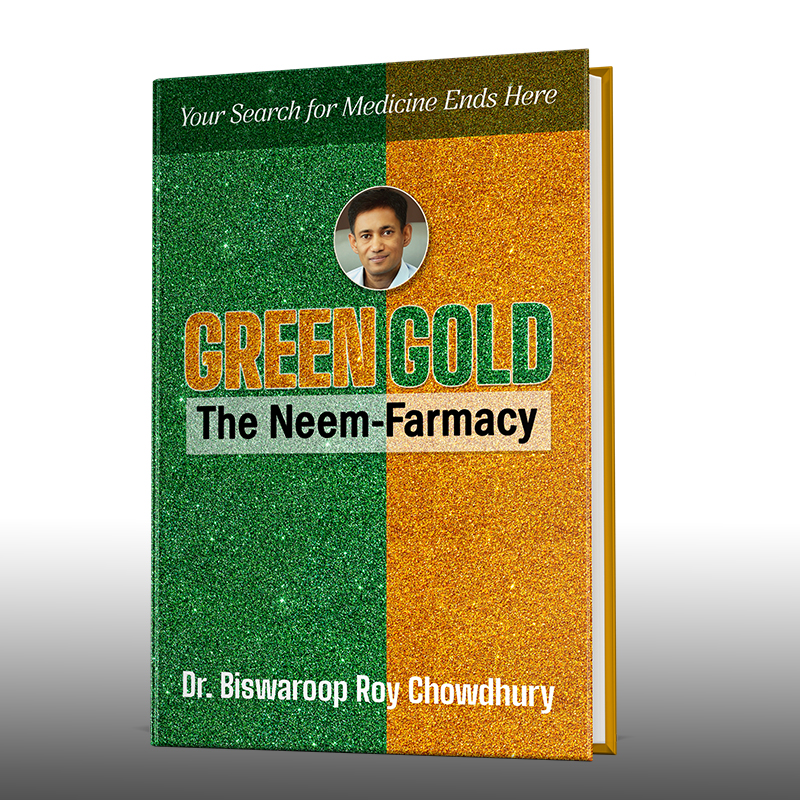
In several classical Ayurvedic texts and Nighantus (lexicons), neem is referred to as Sarva Roga Nivarini, which means ‘the curer of all diseases’ or ‘the universal healer’. The book Green Gold – The Neem-Farmacy, written by Dr. Biswaroop Roy Chowdhury, builds upon this traditional title to explore neem’s relevance as a daily lifestyle component rather than an occasional remedy.
Neem in Ancient Medical Systems
Neem occupies a central place in ancient systems of medicine such as Ayurveda, Siddha, Unani, as well as in folk traditions. These systems describe neem as bitter, cooling, detoxifying, and balancing in nature. Traditionally, different parts of the neem tree—leaves, bark, seeds, oil, and flowers—have been used for internal consumption, external application, and environmental purification.
Ayurveda classifies neem as a powerful purifier that supports blood, skin, digestion, and immunity. Siddha medicine emphasizes neem’s role in maintaining internal balance and metabolic harmony. In Unani medicine, neem is valued for its cleansing and cooling properties, while folk medicine has long used neem for hygiene, pest control, and seasonal protection. The consistency of neem’s use across diverse systems highlights its long-standing therapeutic credibility.
Neem’s Validity in Both Modern Science and Traditional Medical Practices
A key insight from Green Gold – The Neem-Farmacy is neem’s validity in both modern science and traditional medical practices. While ancient texts documented neem’s effects through observation and experience, modern research has identified bioactive compounds such as azadirachtin, nimbin, nimbolide, and quercetin. These compounds are studied for their antimicrobial, anti-inflammatory, antioxidant, and immunomodulatory properties.
The book emphasizes that modern science does not replace traditional medical knowledge but rather provides a biochemical explanation for what ancient systems already practiced. It presents Neem as a rare example of a medicinal plant where traditional knowledge and contemporary scientific research meaningfully converge.
Daily Use of Neem: A Preventive Lifestyle Approach
Unlike conventional approaches that rely on intervention after illness occurs, Green Gold – The Neem-Farmacy advocates the daily use of neem as a preventive measure. Traditionally, neem was integrated into daily routines in small, consistent amounts—whether through consumption, hygiene practices, or environmental exposure.
Examples of traditional daily use include:
- Consuming small quantities of neem leaves or neem-based preparations
- Using neem-based water or rinses for hygiene
- Applying neem externally as part of personal care routines
The book presents neem as a lifestyle discipline rather than a quick remedy. Regular, mindful use is emphasized over sporadic or excessive intake. This philosophy mirrors traditional health systems that prioritize balance, routine, and long-term resilience over symptom suppression.
Lifestyle Benefits Offered by Neem Beyond Disease Management
One of the book’s central themes is the broader lifestyle benefits offered by neem. Instead of focusing narrowly on disease outcomes, it explores how neem supports broader aspects of well-being. Neem is described as having properties traditionally associated with detoxification, overall resilience, metabolic support, and skin health.
From a lifestyle perspective, neem is associated with:
- Supporting internal balance and detoxification processes
- Promoting healthy skin and digestive function
- Enhancing the body’s adaptive capacity
- Encouraging disciplined daily habits
The book highlights that neem’s benefits are most effective when combined with appropriate diet, routine, and environmental awareness.
Key Insights from Green Gold – The Neem-Farmacy
Some of the book’s core insights include:
- Neem is best understood as a holistic support plant rather than a quick-fix remedy.
- Consistency and moderation are essential for safe and effective use.
- Neem’s bitterness is a functional property rather than a drawback.
- Traditional knowledge and modern research should be viewed as complementary rather than conflicting.
The book also stresses responsible usage, proper preparation, and contextual understanding, reinforcing that natural substances require informed application.

Conclusion
Neem’s journey—from ancient scriptures to modern laboratories—reflects its enduring relevance. Grounded in long-standing cultural practices and increasingly supported by science, Neem continues to be relevant today. Known as Sarva Roga Nivarini, neem stands as a symbol of holistic health rooted in nature. By exploring its daily use, lifestyle benefits, and validity in both modern science and traditional medical practices, Green Gold – The Neem-Farmacy presents neem as a practical, disciplined, and thoughtful addition to contemporary life.