

To enroll in 1 month Online Certification in Autism & ADHD Reversal (C.A.A.R) course, Click Here...
Cure Autism Now book by Dr. Biswaroop Roy Chowdhury showcasing the C.A.N. Protocol for children with autism as a natural path.

The C.A.N. Protocol for Children with Autism

Table of Contents

Autism and Its Prevalence

Autism is a neurodevelopmental disorder. Children with autism have difficulty communicating with others, understanding emotions, and connecting socially. They think, feel, and behave differently from other children.

You must be aware of the fact that there are around 50 lakh children with autism in India.

Everyday Challenges Faced by Children with Autism and Their Families

The child affected by autism has a completely different world: totally unpredictable, totally unknown and inaccessible to others. Such a child can’t behave normally, for example, the child can’t brush on his own like a normal child, can’t put on or take off clothes on his own, walks on toes instead of feet (toe plus heel), can’t stand still, instead constantly waves his hand. Such a child is unaware of danger; for example, the child can jump off a cliff. That’s why parents have to supervise them closely or have to avoid visiting dangerous places.

Life of parents of such children becomes a living hell; simply because these children need constant monitoring (almost 24 hours) even when they are sleeping. This is because parents never know when such children are going to sleep and when they are going to wake up.

There is a scenario of total unpredictability. So, there is no possibility of their independent existence; simply put, they can’t be left alone at any point of time.

Turning Hopelessness into Possibility: The C.A.N. Protocol

Against this backdrop of hopelessness surrounding the condition of autistic children, we present a solution that can help reduce the struggles faced by both parents and children. The solution is a five-pronged approach called the C.A.N. (Cure Autism Now) Protocol, which consists of the following:

  1. Grounding and sunlight exposure
  2. Neem Therapy and the D.I.P. Diet
  3. Probiotic or fermented drinks
  4. Plant-based fats, especially coconut fat
  5. Zero Volt Bedsheet

Grounding and Sunlight Exposure

The very first step involves grounding (part of Zero Volt Therapy) and sunlight exposure (Part of ‘Follow the Sun’ principle). When your child wakes up, take them to a spot where sunlight falls and let their bare feet touch the ground. Encourage them to play barefoot on soil or grass. This combination of sunlight exposure and grounding acts like Sanjivani Booti — a powerful, rejuvenating medicine for both body and mind.

Set a specific time each morning for sunlight and grounding. If you wake up at 5 a.m. and take your child outside to bask in the morning light, it will work wonders — not just for your child but for your own health as well. Grounding should always be the first step for the child upon waking.

Neem Therapy and the D.I.P. Diet for Breakfast

Next, around 7 or 8 a.m. (depending on the child’s routine), introduce Neem Therapy. The dosage is 1 gram of neem powder for every 10 kilograms of body weight. For example, if a child weighs 10 kilograms, give 1 gram of neem powder mixed in a small amount of lukewarm water. This becomes the second step, followed by breakfast.

More creative ways for administering Neem are provided in the C.A.N. book. If you wish to explore the miraculous effects of Neem in detail, refer to the book Green Gold – The Neem Farmacy.

Breakfast should consist entirely of fruits, according to the D.I.P. Diet. Offer three or four seasonal fruits such as apples, oranges, bananas, grapes, or any locally available variety. Avoid off-season or imported fruits purchased from air-conditioned stores. Always choose fresh, locally grown, seasonal fruits — they are more nutritious, naturally ripened, and much more affordable. The exact details of D.I.P. Diet for children affected by autism are provided in the C.A.N. book. Fruit breakfast should ideally be completed by 12 p.m.

Probiotic or Fermented Drinks Before Lunch

Between breakfast and lunch — depending on the child’s hunger — you can serve a fermented drink, known as Ambli. As a general guide, for a child weighing 20 kilograms, give about one cup (or half a glass for smaller children) of fermented probiotic drink before lunch.

If your child is at home, start this routine immediately. Within a few months, you’ll begin to see visible improvements in their condition. Once the child shows progress, you can introduce some flexibility into the routine. For now, give your full attention and follow the plan consistently. As you witness your child’s improvement, your motivation to continue will grow naturally.

The D.I.P. Diet for Lunch and Dinner

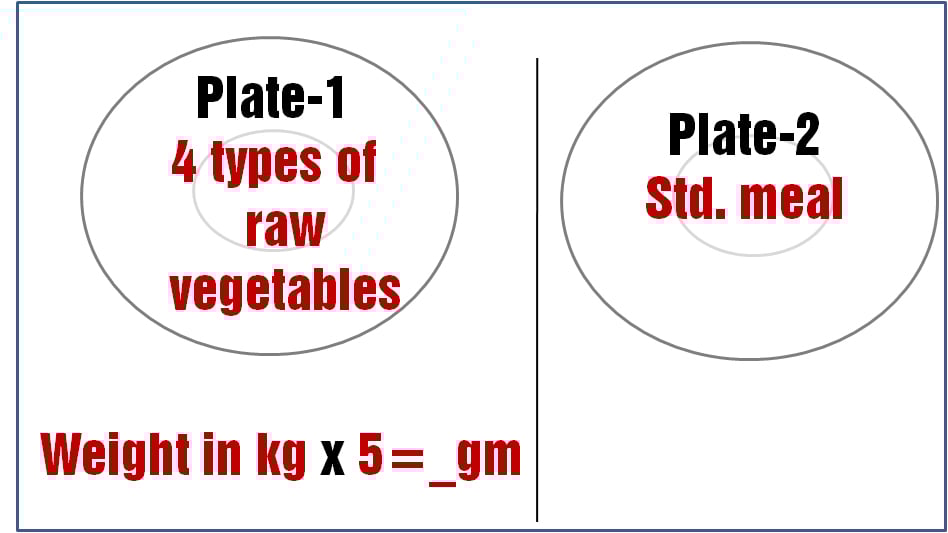
According to the D.I.P. Diet, lunch is divided into two parts — Plate-1 and Plate-2. Plate-1 consists of raw vegetables — essentially, a salad. Include items such as tomatoes, cucumbers, radishes, carrots, capsicum, peas, lettuce, beets, onions, and similar vegetables. For a child weighing 30 kilograms, multiply the weight by 5 — that gives 150 grams of raw vegetables. This should be considered the minimum quantity.

Some children may dislike the taste of raw vegetables. Do not force them. Parents should find creative ways to make salads enjoyable — by adding flavors or using recipes included in the C.A.N. book.

Once the child finishes Plate-1, move to Plate-2 — consisting of cooked food such as dal, rice, or millet-based rotis. Avoid rotis made from wheat flour. Instead, use millets or no-grain flours. Any home-cooked dal or vegetable dish is fine. South Indian options like idli and dosa are also suitable. Together, these complete the lunch meal.

Ensure that the total quantity of Plate-1 (raw vegetables) is always greater than Plate-2 (cooked food). If the child cannot eat a large amount of raw vegetables (salad), aim to keep the two plates roughly equal in quantity. Parents’ creativity and flexibility will make this practical, and the recipes provided in the C.A.N. book will be very helpful.
Dinner should be similar to lunch — the same rules apply. Once dinner is over, the child should not eat anything further.


Fermented Drink Between Lunch and Dinner

Between lunch and dinner, give your child the fermented drink, Ambli, just as you did after breakfast. Make it a daily habit — Ambli is highly beneficial for digestion and gut health. You’ll learn more about its preparation and benefits in the C.A.N. book.

Following the Body’s Circadian Rhythm

According to the body’s circadian rhythm, all meals should ideally fall within a 12-hour eating window. For example, if the first meal is at 7 a.m., the last meal should be around 7 p.m. Nothing should be eaten after that until 7 a.m. the next day.

Following this natural rhythm allows the body to rest, heal, and rebalance itself. It enhances digestion, improves the gut microbiome, and promotes deeper, more restorative sleep.

Parents should therefore aim to complete the child’s dinner by 7 p.m., or at the latest, by 8 p.m.

Some people prefer to eat before sunset, which is ideal. However, since that’s not always practical, finishing dinner by 8 p.m. is acceptable. This gap gives the digestive system time to rest and reset before the next day.

Importance of Plant-Based Fats

Children often feel hungry between meals. Between 7 a.m. and 7 p.m., you can give small portions of plant-based fats, especially coconut fat.

Plant-based fats are crucial for a child’s brain and body development. Since children may not enjoy eating plain coconut daily, the C.A.N. book provides creative and tasty recipes that include coconut in enjoyable forms.

Although some plant-based fat is included in lunch and dinner, the daily requirement should be met carefully. For example, a 20-kilogram child needs about 20 grams of fat per day to meet the full daily allowance.

You may also use coconut oil. The recommended amount is 1 gram per kilogram of body weight — for example, a 10-kilogram child needs about 2 teaspoons of coconut oil per day. You can drizzle it over salads, mix it into cooked food, or even give it directly by spoon.

Improving Sleep with Zero Volt Bedsheet

If the child goes to bed around 9 p.m., that ensures sufficient, high-quality sleep. The child should ideally sleep on a Zero Volt Bedsheet (part of Zero Volt Therapy). Zero Volt Bedsheet is a regular sheet embedded with a thin copper wire. When someone lies on it, the copper comes into contact with the body. One end of the wire remains attached to the sheet, while the other is extended outside the window and grounded in bare soil. This simple arrangement connects the body to the Earth, restoring the natural electrical balance.

Children with autism often suffer from disturbed sleep. Deep, restful sleep helps reduce hyperactivity, enhances focus, and improves overall cognitive abilities. Parents should make every effort to ensure their child sleeps soundly. Adequate sleep alone can significantly reduce many symptoms.

‘Follow the Sun’ Principle

Always remember the principle of ‘Follow the Sun’. Your child’s routine should move in harmony with the Sun’s natural rhythm.

Avoid serving dinner long after sunset — finish it by 7 p.m., and if that’s not possible, no later than 8 p.m. Eating late doesn’t benefit the body — in fact, it can harm digestion and metabolism. This rule applies not only to children but to adults as well.

After sunset, gradually reduce food and drink. The day should begin with barefoot grounding and morning sunlight, and end quietly as the Sun sets.

Following these simple yet powerful steps will help your child sleep better, restore their circadian rhythm, and as that rhythm stabilizes, you’ll begin to see their overall health and behavior improve naturally.

For More Updates Follow Dr. Biswaroop Roy Chowdhury