
Diet, Lifestyle & the Role of Plant-Based Eating
Somewhere in India, right now, a person is being told they have Type 2 diabetes and that they will need medication for the rest of their life. It happens dozens of times every hour. But Dr. Biswaroop Roy Chowdhury, one of the country’s most well-known voices in lifestyle medicine, has spent decades asking a quieter, harder question: does it have to be that way?
His answer, backed by published research and thousands of patient cases, is that for most people, blood sugar can be meaningfully supported and in many cases dramatically improved through what they eat, how they move, and how they live. Not with complicated protocols, but with changes that have been sitting in plain sight all along.
The DIP Diet: Where It Starts
The foundation of Dr. Biswaroop’s approach to reverse Type 2 diabetes is his D.I.P. Diet, the Disciplined and Intelligent People’s Diet. It is a whole-food, plant-based framework rooted in the research of Dr. T. Colin Campbell’s landmark China Study, adapted into something an ordinary Indian household can actually follow.
The structure is precise but not complicated. From waking until noon, only fresh seasonal fruits are consumed – roughly 10 grams per kilogram of body weight. So, a person weighing 70 kg would eat around 700 grams of 3 to 4 fruit varieties, nothing else. No chai, no biscuits, no morning snacks alongside.

Lunch and dinner follow what Dr. Biswaroop calls the two-plate system. The first plate – eaten before the cooked meal — is raw vegetable salad: carrots, tomatoes, cucumber, radish, sprouts. The second plate is a home-cooked vegetarian meal, prepared with minimal oil and salt. No packaged foods, no refined products, no animal proteins.
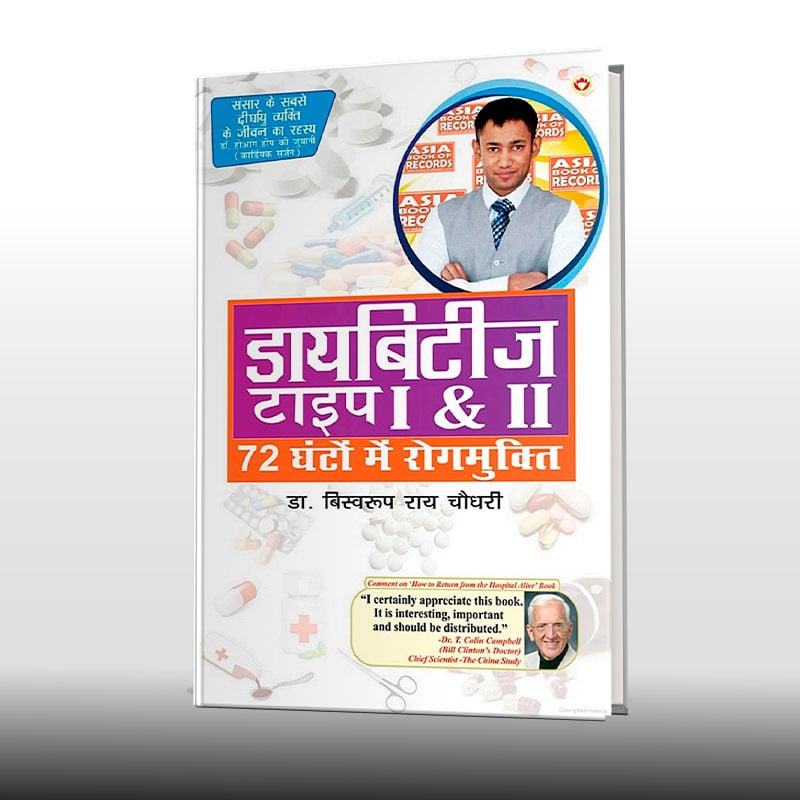
In a 2017 study published in the Journal of Metabolic Syndrome, Dr. Biswaroop documented outcomes across 55 diabetic patients — both Type 1 and Type 2 — who followed this plant-based protocol over three days. Blood glucose levels dropped measurably in most participants. Insulin dependency reduced to zero or tapered significantly. The data pointed to something the mainstream conversation about diabetes in India rarely entertains: that food itself can be a powerful tool for blood sugar reversal.

Why Plant-Based Eating Works for Diabetics
Dr. Biswaroop describes the body’s intelligence using a simple analogy: think of the nutrients in fruits and vegetables as letters with a destination. The body, like a postman, knows exactly which organ needs what — and delivers accordingly. When the food is whole and natural, that system functions smoothly. When it is processed, chemically altered, or stripped of fibre, the signals get confused and metabolic disorders follow.
For someone trying to control blood sugar without medicine or reduce their dependence on medication, this matters enormously. High-fibre plant foods slow glucose absorption. Raw vegetables eaten before a cooked meal blunt post-meal sugar spikes. Fruits, contrary to popular belief, when eaten at the right time and in the right context, do not destabilise blood sugar the way processed carbohydrates do.
The Lifestyle Piece People Skip
Diet alone, as Dr. Biswaroop is quick to emphasise, is not the whole picture. Two daily practices he recommends consistently to people managing Type 2 diabetes are Grounding and Sunlight exposure — both simple, both free, and both routinely underestimated.
Walking barefoot on grass or soil for at least two hours each day helps regulate cortisol and reduces low-grade inflammation, two factors that are quietly worsening insulin resistance in millions of urban Indians who spend their days on synthetic flooring. Morning sunlight, around 20 to 30 minutes on bare skin, supports Vitamin D synthesis and crucial for diabetics – improves insulin sensitivity. Patients at Dr. Biswaroop’s centres have reported noticeable changes in their fasting sugar levels within days of starting barefoot morning walks.
Sleep, too, plays a role that rarely makes it into the standard diabetes management conversation. Dr. Biswaroop’s book The Circadian Doctor addresses how disrupted body clocks amplify metabolic dysfunction. Getting to bed earlier, limiting screen exposure at night, and aligning meals with daylight hours are all adjustments his protocol encourages and each of these, without any medication, can have a stabilising effect on blood sugar over time.
A Different Kind of Diabetes Conversation
Dr. Biswaroop vouches for what food and lifestyle can achieve when given a real chance. His book Diabetes Free World has been translated into 73 international & national languages, a world record -which gives some sense of how widespread the hunger is for this kind of information.
Managing Type 2 diabetes naturally is not about being extreme. It is about being consistent — fruit in the morning, raw salad before meals, a home-cooked vegetarian plate, a walk in the morning sun, and sleep that actually restores. These are not radical ideas. For much of human history, they were simply called living well.
The results – for those willing to try – have a way of speaking for themselves.