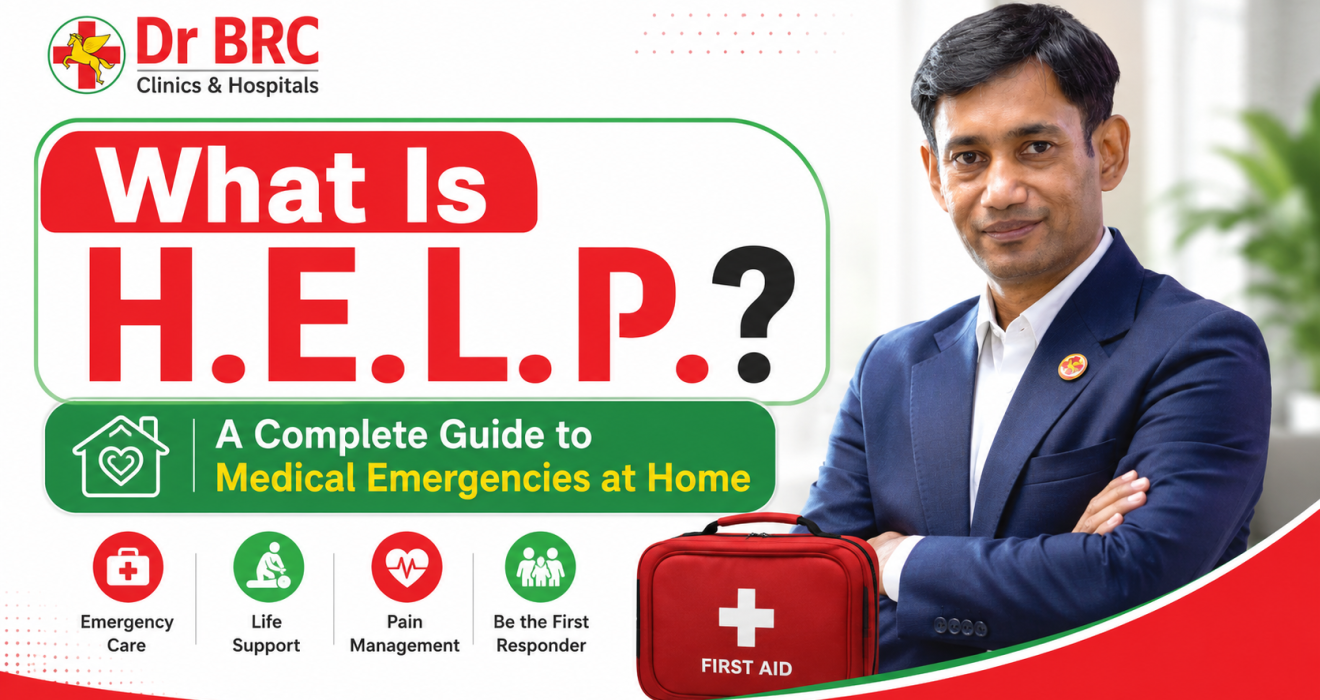
What Is H.E.L.P.? A Complete Guide to Handling Medical Emergencies at Home
Picture this- your father suddenly clutches his chest at the dinner table, or your child spikes a fever of 104°F at 2 a.m. The nearest hospital is twenty minutes away on a good day. What do you do in those twenty minutes? For most of us, the honest answer is: not much. We call an ambulance, we panic a little, and we wait. That gap – the space between “something is wrong” and “help has arrived” something precious is lost & that precious thing is life! This gap is exactly what Dr. Biswaroop Roy Chowdhury’s H.E.L.P. course was built to close.
What Exactly Is H.E.L.P.?
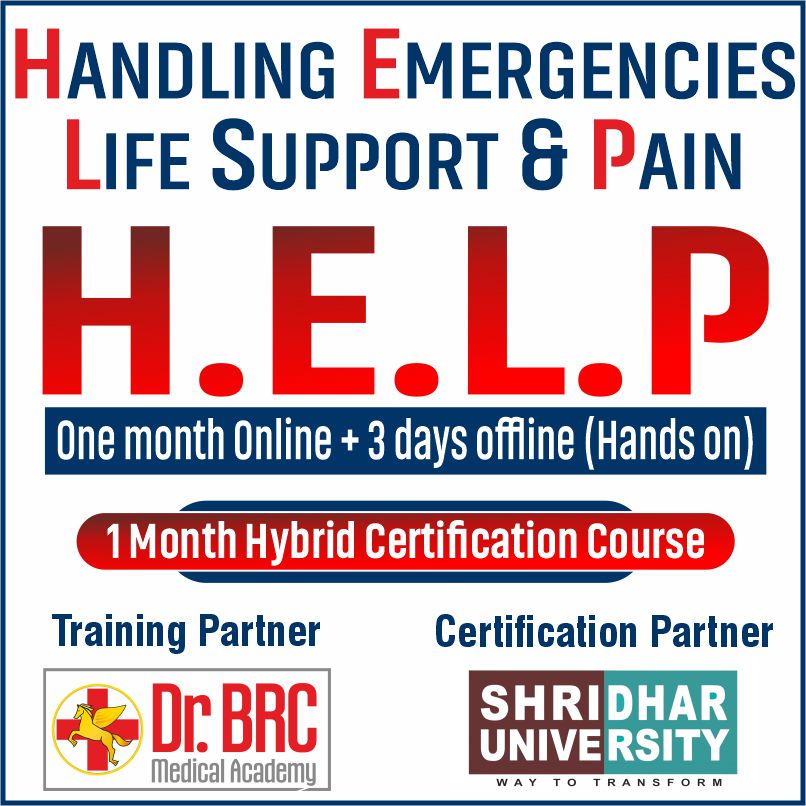
H.E.L.P. stands for Handling Emergencies, Life Support & Pain, and it’s a one-month online certification course designed by Dr. Biswaroop Roy Chowdhury, popularly known as Dr. BRC. The structure is straightforward- a month of online learning followed by three days of hands-on training, runs in partnership with Shridhar University and the Dr. BRC Medical Academy. It isn’t a course built around theory you’ll forget in a week, it’s built around muscle memory, the kind you can actually reach for when your hands are shaking.
Why This Kind of Preparedness Actually Matters
Most families treat medical emergencies the way they treat fire extinguishers, something they assume they’ll never need, until the day they desperately do. A heart attack, a seizure, a sudden asthma attack – these don’t wait for a doctor to arrive. What happens in the first few minutes very often decides how the next few years look. That’s the uncomfortable math behind H.E.L.P., and it’s why Dr. BRC describes it as training people to become “the first responder” in their own homes, long before an ambulance is even in the picture.
What the Course Actually Teaches
H.E.L.P. isn’t just first aid with a new name. It’s an evidence-based integration of four distinct systems – Acupressure, Ayurveda, Postural Medicine, and Modern Medicine, stitched together into protocols that ordinary people, not just doctors, can apply. Learners/trainees walk away with a certificate, a detailed H.E.L.P. manual and a reference ready H.E.L.P poster. The idea is that the knowledge shouldn’t live only in a classroom, it should be pinned to your kitchen wall.
The Emergencies It Covers
The course is built around more than 50 medical emergencies and pain conditions, and the range is wider than most people expect. It covers the everyday (headaches, toothaches, nausea, menstrual pain), the anxiety-inducing (fainting, heatstroke, motion sickness), and the genuinely life-threatening (heart attack, cardiac arrest, brain stroke, epilepsy, high blood pressure, tachycardia, asthma attacks). Few first-responder programs try to cover this much ground, which is exactly what makes H.E.L.P. useful for a household rather than just a clinic.
Who Should Actually Take This Course
Realistically, everyone. But it’s especially built for Dr. BRC’s Clinic@Home clinicians, students, naturopaths, Ayurveda Practitioners, Homeopaths already familiar with his health frameworks, and new candidates whether they’re parents, caregivers, or working professionals who simply don’t want to freeze the next time something goes wrong at home.
The Real Value: Confidence, Not Just Certification
The biggest thing H.E.L.P. hands you isn’t the certificate, it’s the confidence that you won’t just stand there next time. Emergencies are frightening precisely because they’re unpredictable, but a trained response turns panic into a checklist. That shift, from helpless bystander to capable first responder, is really what Dr. BRC’s H.E.L.P. course is selling and for most families, it’s worth far more than the fee.