
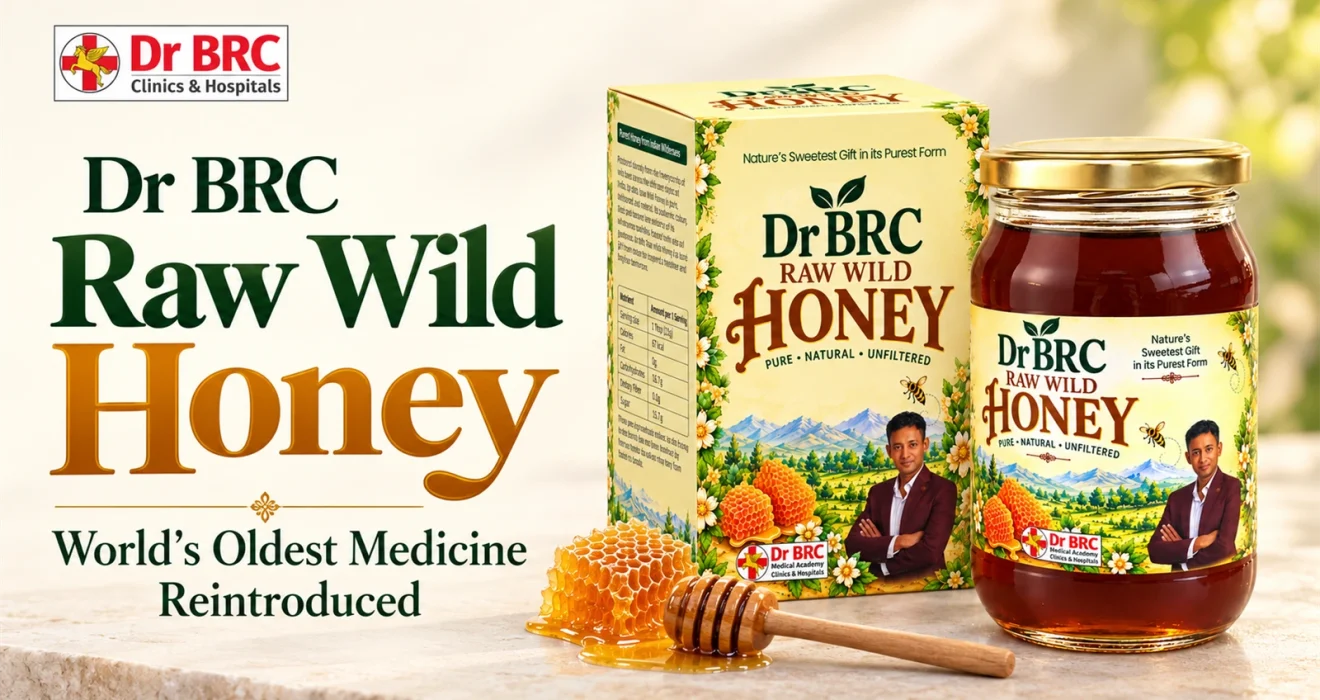
Dr BRC Raw Wild Honey: World’s Oldest Medicine Reintroduced
Long before laboratories and pharmacies, people reached for honey when they were hurt or unwell. Honey is among the few natural substances trusted as a remedy by almost every major civilization, and it is the only common food that, kept sealed, essentially never spoils. Modern science is now beginning to explain why humanity has trusted it for so long.
A Substance That Does Not Spoil
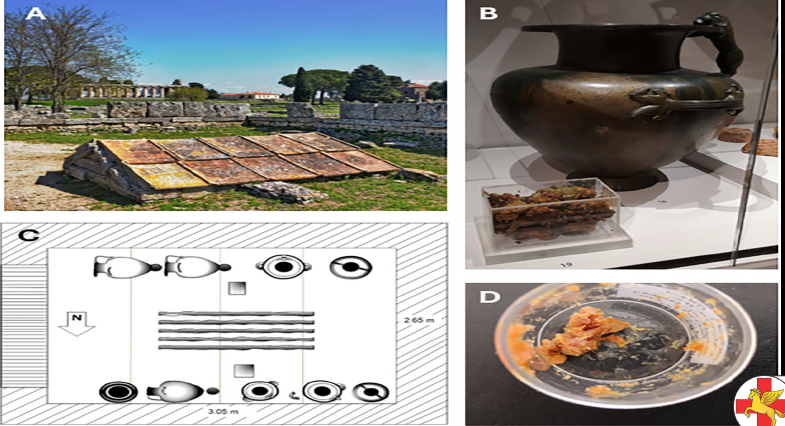
Honey’s first remarkable quality is its endurance. Archaeologists have recovered honey residue from bronze jars in a shrine at Paestum in Italy, dating to about 530-510 BCE. Honey sealed away for roughly 2,500 years is still recognizable as honey, and pure honey of this kind remains edible. Few natural substances can make such a claim.
The reason lies in honey’s composition. It is rich in sugar and low in water, so bacteria and fungi that land in it lose their moisture and cannot multiply. Bees also add an enzyme that gradually produces small amounts of hydrogen peroxide, and honey is naturally acidic. Together, these features make it a hostile place for microbes. Ancient people did not know the chemistry, but they noticed the result: a food that stayed fresh, and a sweetness that seemed to protect against decay.
Ancient Roots
The relationship between humans and honey is older than writing. A cave painting found in Bicorp, Spain, in 1921 shows a honey hunter climbing a tree to harvest a wild hive, and it is dated to roughly 8000 BCE. Humans, in other words, have been collecting honey for about ten thousand years.
The earliest medical uses appear in the great civilizations. Ancient Egyptians applied honey to wounds, and it appears in their medical texts as a healing agent. In India, the Rigveda, composed roughly four thousand years ago and among the oldest scriptures in the world, celebrates honey as a remedy for injuries. Later Ayurvedic texts such as the Charaka Samhita, Sushruta Samhita and Ashtanga Hridaya describe honey for cleansing wounds, easing cough and treating skin and digestive complaints. They also warn against heating honey, a caution that echoes in modern food science.
What is striking is how closely these traditions agree. Whether in Indian, Egyptian, Greek or Islamic medicine, honey was recommended for wounds, for digestion and for coughs. Societies separated by oceans and centuries arrived at the same conclusion independently, which suggests that their observations rested on real experience rather than on myth.

Honey in Faith and Custom
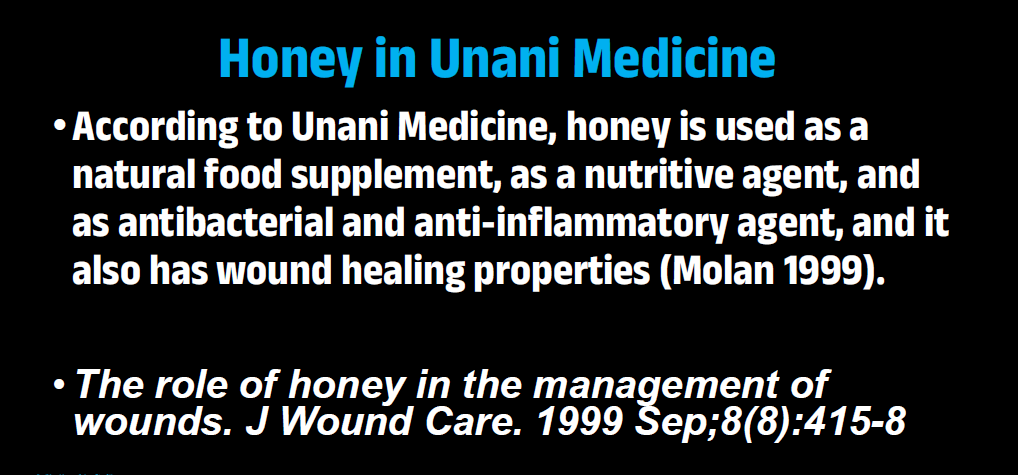
Honey also holds a sacred place across faiths. The Qur’an devotes a chapter to the honey bee, Al-Nahl, and describes honey as a drink “in which there is healing for people” (Surah An-Nahl, verses 68-69). The Book of Proverbs compares gracious words to a honeycomb, “sweetness to the soul and health to the body.” Unani medicine used honey as a nutritive agent and as an antibacterial and anti-inflammatory remedy. Honey was even woven into custom: the word “honeymoon” is linked to Northern European traditions of giving newlyweds honey wine.
These references matter for a simple reason. Religious and medical texts were the records of their age, and the fact that honey appears in so many of them shows how deeply it was woven into the daily life and health care of ordinary people across many cultures and centuries.
From Universal Remedy to Forgotten Cure
Honey’s reputation lasted into modern times. During the First World War, physicians in several countries, including Russia, reportedly used honey to prevent infection and speed the healing of soldiers’ wounds. For thousands of years it had been one of the most widely used treatments for injury.
Then the age of antibiotics arrived. From the early twentieth century, scientists discovered drugs that could kill bacteria directly, and these medicines were fast, powerful and standardised. Honey, a traditional remedy that varied from one hive to another, was gradually pushed to the margins. Today most people think of it as a kitchen sweetener or a home remedy for a sore throat, and few picture it in a hospital.
The Return of an Old Remedy
The story did not end there. Bacteria evolve, and over decades many have become resistant to antibiotics that once cured them. Antibiotic resistance is now recognised as one of the biggest threats to global health, and it has sent researchers back to older ideas. Honey has attracted serious attention because it attacks microbes in several ways at once, which makes it hard for bacteria to adapt to. Laboratory studies show that manuka honey from New Zealand, which contains a compound called methylglyoxal, can inhibit even antibiotic-resistant bacteria such as MRSA.
How Honey Helps a Wound Heal
The best-supported use of honey today is in wound care, and the reasons are easy to understand. A wound heals slowly when bacteria keep attacking it from outside. A layer of honey acts as a physical barrier between the injury and the environment. It also keeps the wound moist, which helps new skin to grow, and its thick texture stops dressings from sticking.
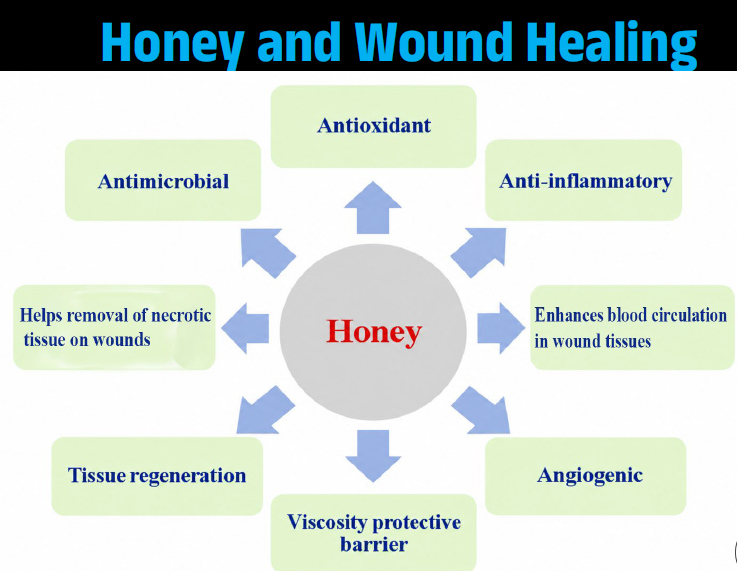
Beyond the barrier, honey fights infection with its sugar concentration, acidity, and hydrogen peroxide. Studies also describe an anti-inflammatory effect, since a wound heals only once inflammation settles. Researchers have further reported that honey helps clear dead tissue from the wound and may encourage the growth of new blood vessels and tissue, although this area is still being studied.
Medical-grade honey dressings are now used for burns, ulcers, pressure sores and infected wounds, and several clinical studies have found them to be affordable compared with some standard dressings. Honey is also a well-established soothing remedy for coughs and sore throats, an application that matches the advice of the ancient Ayurvedic physicians. Research continues into its effects on gut health, inflammation and antioxidant activity.
Propaganda against Honey
Even after possessing so many medicinal properties, the use of honey significantly dropped after the 1920s. The reason behind this decline is the introduction of antibiotics in the medical market. This new man-made medicine was marketed with such fervour that, over time, honey and its magical characteristics were wiped clean from the memories of the people across the globe.
One thing that is crucial and should be understood by the people who regularly take antibiotics is that, with time, the bacteria that are present in the environment and are infecting humans, causing various diseases, evolve and become resistant to the drugs they are treated with. This process is called mutation.

So, it won’t be wrong to conclude that these antibiotics cease to be useful in tackling infection and only worsen the body of the patient consuming these meds with their residual effects.
Still, people keep on using this drug due to a lack of proper knowledge and also because their memories of honey being a more effective alternative while dealing with infections have been wiped clean by the world-scale marketing campaigns of the pharmaceutical companies.
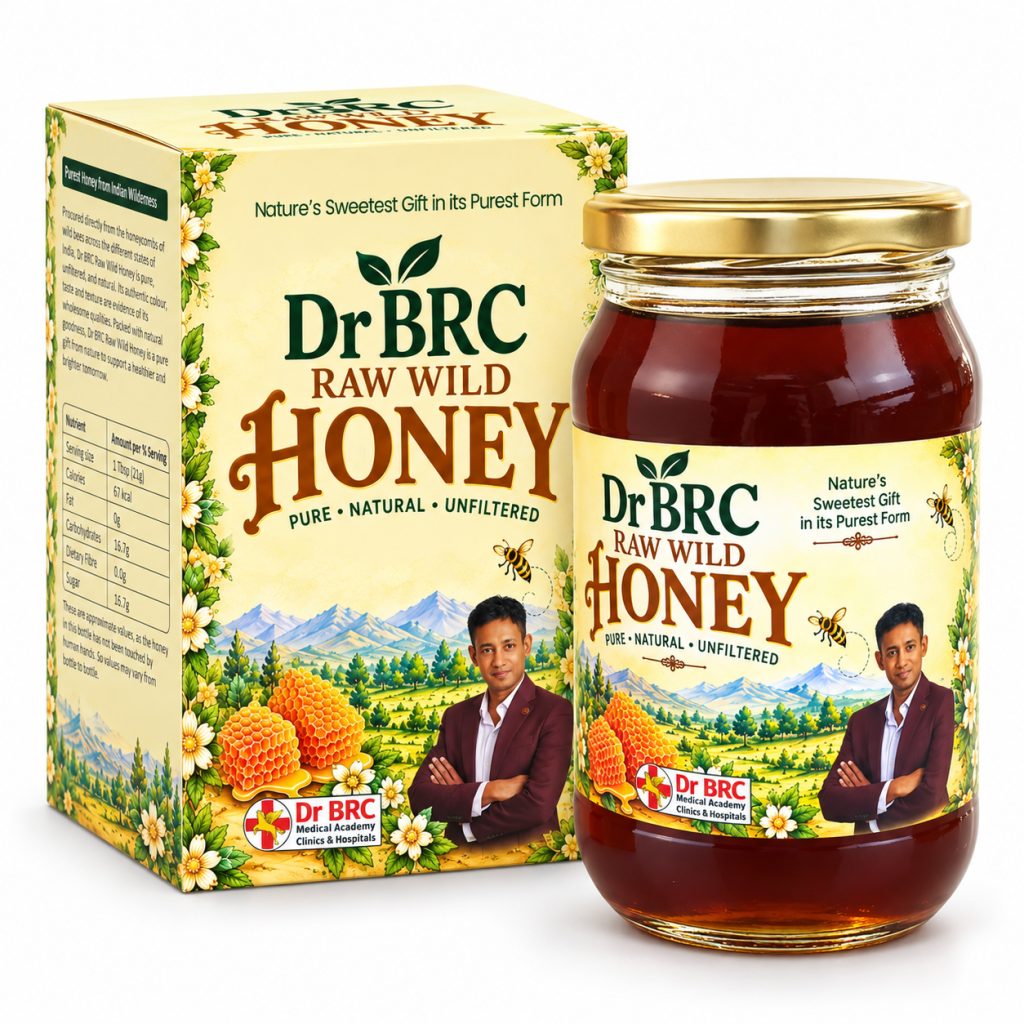
Dr BRC is on an initiative to remind the world of the medicinal properties of the golden nectar. He has recently launched Dr BRC Raw Wild Honey as a part of this initiative. Watch the entire launch event and understand how pure honey is procured and how its use can help in eliminating a variety of medical conditions.
Conclusion
From a cave painting in Spain to bronze jars in Italy, from the Rigveda to hospital wound dressings, honey has accompanied humanity for ten thousand years. Ancient healers valued it through careful observation, and modern science has confirmed many of their instincts. It was set aside when antibiotics arrived, and it is being rediscovered now that those drugs are losing their power, a reminder that old wisdom deserves a fair hearing. Honey’s greatest strength lies in being a gentle, effective helper in healing wounds and soothing the body. Used wisely and alongside proper medical care, it remains one of nature’s most remarkable gifts.